
Kyle Weiger
Share This
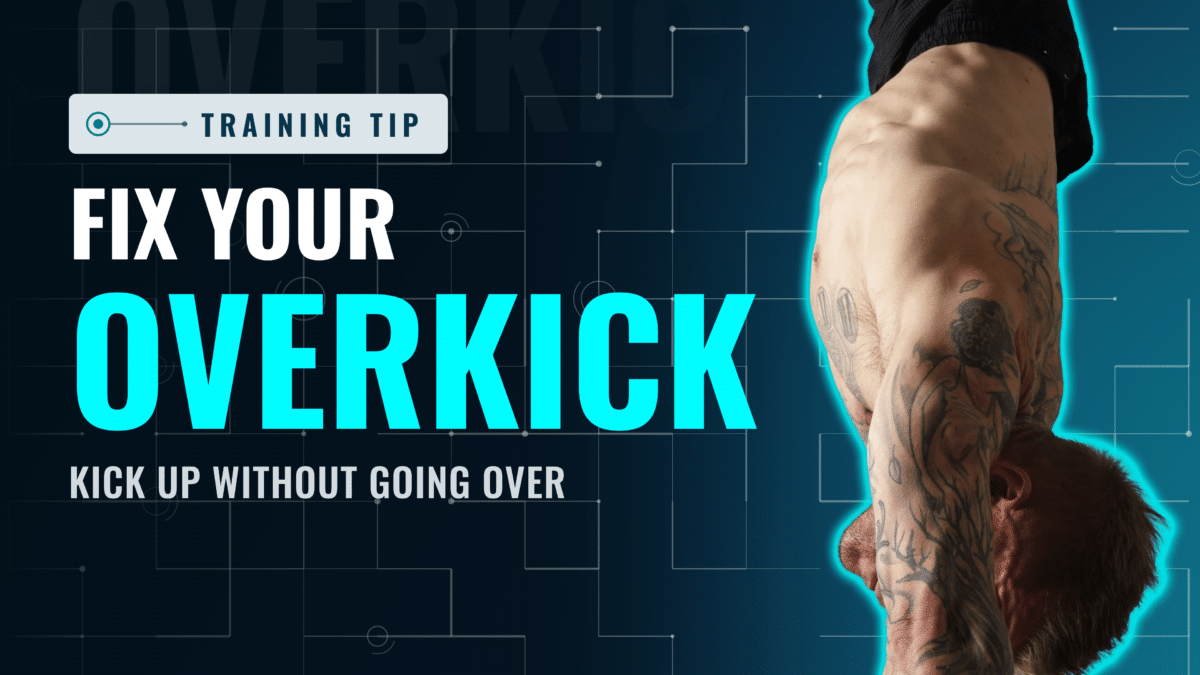
Why your handstand overkick happens
If you kick up and go flying past your hands, you’re not alone. In fact, the handstand overkick is one of the most common things I see with adult students. And it almost always comes down to one simple concept: calibration.
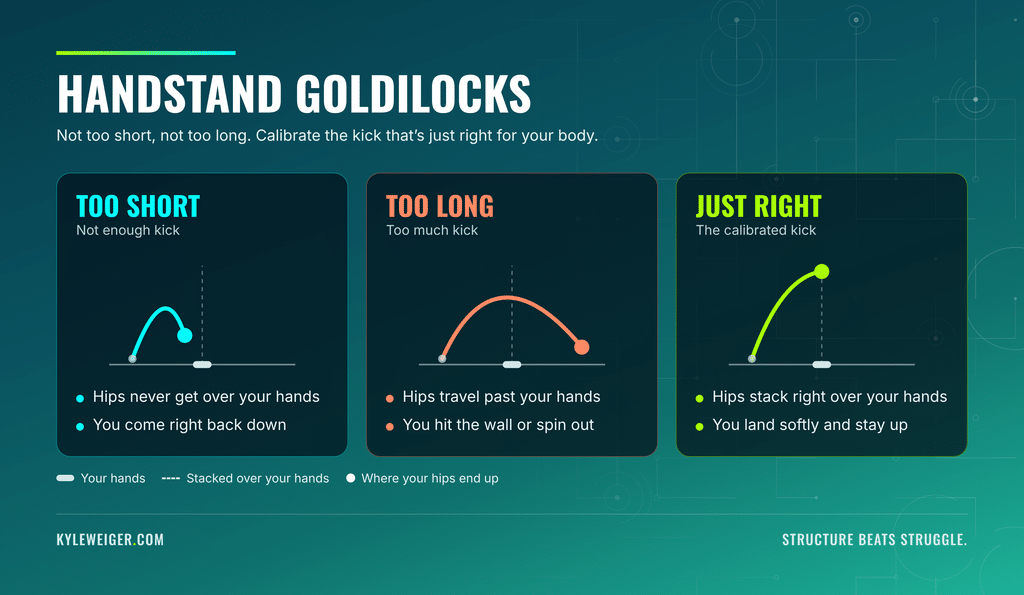
If your kick is too short, your hips never get over your hands, so you come right back down. If it’s too long, your hips go past your hands. Then you either fall toward the wall, or you have to spin out and save yourself in the middle of the room.
Play handstand Goldilocks
For those of you old enough to remember the story of Goldilocks and the Three Bears, Goldilocks tries out everything in the bears’ house. First the beds: this one’s too soft, this one’s too hard, and this one is just right. Then the porridge: this one’s too hot, this one’s too cold, and this one is just right.
In handstand, we want to be like Goldilocks. You’re looking for the just-right amount of kick for your body, based on your height, your weight, your trajectory and your speed.
[INSERT GRAPHIC: 20261002_BLOG_How_To_Fix_Your_Handstand_Overkick_GRAPHIC.png]
Calibration is a skill you can learn
Here’s the good news: calibration is a skill, so you can learn it. Like every handstand skill, it moves through acquire, refine and maintain. First you acquire your perfect calibration. Then, the more you use it, the better and more automatic it gets.
It’s not a strength problem
I know this one firsthand. My own handstand was stuck on the wall for almost two years. I’d hurl my entire body weight up against the wall and overkick it by a mile.
Here’s the thing: if you can kick up, go over and slam into the wall, you’re already strong enough. You don’t need more strength. Instead, you need to dial back the strength and apply more skill.
So fixing your handstand overkick usually means being softer. Think more precise, more graceful and more fluid, while using less strength.
Two drills to calibrate your kick
I include these calibration drills in all of my courses:
- Twinkle toes. This one is all about how you land at the wall. Instead of crashing in, you practice arriving softly and lightly, like you’re on your tiptoes.
- The 10% kick-in. Here you test how much push you actually need off the floor. The goal is to lift up softly and land softly, so you find the smallest kick that still gets your hips over your hands.
Try both in your next session. Then notice how little effort a well-calibrated kick really takes.
Find your just-right kick
Both of these drills are part of The 4 Essential Handstand Elements. The course walks you through the foundations step by step, so you never have to guess. I designed it for adult beginners working at the wall who want a clear path forward.
Keep building with me
If this helped, come train with me on social. I share drills, form checks and coaching breakdowns for adult handstanders at every stage of the roadmap.
- Instagram: @kyleweiger
- TikTok: @handstandcoach
- YouTube: youtube.com/kyleweiger
- Facebook: Kyle Weiger Handstand Coach
Kick softer, land lighter, and find your just right. You’re on the right path, my friends.
Structure beats struggle.